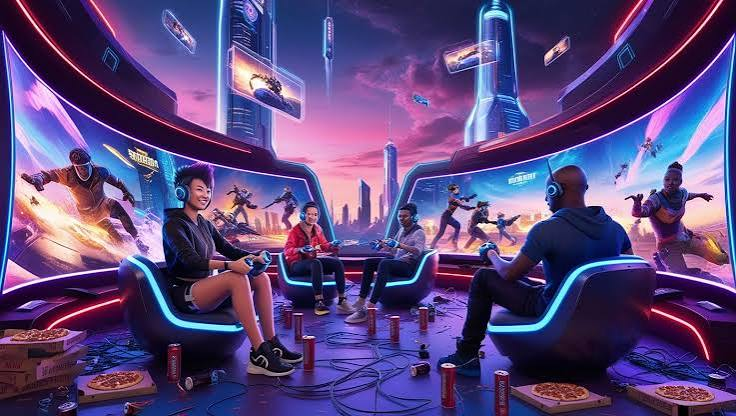
Online gaming has become one of the most exciting and rapidly expanding sectors of digital entertainment. What once began as a simple way to play with friends over the internet has developed into a worldwide industry that attracts millions of players every day. As gaming enthusiasts explore new titles, competitive events, and entertainment platforms, many also encounter services like Kilau4D while browsing the broader online gaming ecosystem. With continuous technological innovation and an ever-growing global community, online gaming continues to redefine how people connect, compete, and enjoy interactive entertainment.
The Evolution of Online Gaming
The online gaming industry has experienced remarkable transformation over the past few decades. Early internet games offered basic graphics and limited multiplayer capabilities due to slower internet speeds and less powerful hardware. Despite these limitations, they introduced players to a completely new way of interacting with games.
Today, the experience is entirely different. Modern games feature realistic graphics, cinematic storytelling, advanced physics engines, and massive multiplayer environments where thousands of players can interact simultaneously. These improvements have made online gaming one of the most immersive forms of entertainment available.
Developers continue investing in new technologies that improve gameplay while regularly releasing updates that introduce fresh content. Seasonal events, new maps, additional characters, and gameplay improvements help maintain active player communities long after a game’s original release.
Accessibility Has Expanded the Gaming Community
One of the primary reasons behind gaming’s incredible popularity is accessibility. Players can now enjoy games using smartphones, tablets, personal computers, gaming laptops, handheld devices, and dedicated consoles.
The rise of free-to-play games has welcomed millions of new players who can experience high-quality titles without purchasing them upfront. Instead of requiring expensive equipment or physical copies, digital downloads and cloud-based services have simplified access for gamers around the world.
Cross-platform compatibility has also played a significant role. Friends using different devices can often play together without hardware restrictions, making multiplayer gaming more inclusive than ever before.
Diverse Genres for Every Type of Player
The gaming industry offers an impressive variety of genres designed to satisfy different interests and play styles.
Action games provide fast-paced excitement that rewards quick reactions and precise timing. Strategy games encourage planning, resource management, and long-term thinking. Role-playing games immerse players in detailed stories where character development becomes a central focus.
Simulation games recreate real-world activities, sports games allow fans to compete using their favorite teams, and puzzle games challenge logical thinking through creative problem-solving.
This diversity ensures that nearly everyone can find games matching their personal preferences regardless of age or experience level.
Multiplayer Gaming Encourages Collaboration
Online multiplayer games have transformed gaming into a highly social activity. Instead of playing alone, people now work together to complete missions, compete against rival teams, and build lasting communities.
Successful teamwork often requires clear communication, leadership, and cooperation. Players learn to coordinate strategies, assign responsibilities, and support teammates during challenging situations.
These collaborative experiences frequently create friendships that continue outside the game itself. Many gaming communities organize online discussions, tournaments, charity events, and local meetups that strengthen these relationships even further.
The Rise of Competitive Esports
Esports has become one of the fastest-growing sectors within the gaming industry. Professional players now compete in international tournaments featuring millions of viewers and substantial prize pools.
Organizations recruit talented players while employing coaches, analysts, nutritionists, sports psychologists, and performance specialists to help teams succeed.
Major tournaments receive professional broadcasts comparable to traditional sporting events, complete with commentators, expert analysis, instant replays, and live audience participation.
The esports ecosystem has also generated employment opportunities across numerous fields, including event production, journalism, broadcasting, graphic design, software engineering, marketing, and content creation.
Streaming Has Revolutionized Gaming Content
The popularity of livestreaming has completely changed how people engage with games.
Millions of viewers regularly watch creators play new releases, explain advanced strategies, review hardware, and entertain audiences through interactive broadcasts.
Streaming platforms have helped build vibrant gaming communities where viewers can ask questions, participate in discussions, and support their favorite creators.
Many professional players began their careers by producing educational content that demonstrated advanced gameplay techniques and inspired future competitors.
Technology Continues Driving Innovation
The gaming industry consistently adopts emerging technologies to improve player experiences.
Artificial intelligence enables more realistic opponents, adaptive gameplay systems, and sophisticated non-player characters capable of responding intelligently to changing situations.
Graphics technology has reached extraordinary levels of realism through advanced lighting systems, detailed textures, ray tracing, and high-resolution displays.
Fast solid-state storage has dramatically reduced loading times, while modern processors allow larger game worlds filled with interactive elements and complex simulations.
Cloud gaming has further expanded accessibility by allowing users to stream demanding games without requiring expensive local hardware.
Virtual Reality and Augmented Reality
Virtual reality continues introducing entirely new ways to experience games.
Instead of observing a virtual world through a monitor, players wearing VR headsets become immersed inside digital environments where movements feel natural and interactive.
Augmented reality combines virtual elements with real-world surroundings, creating innovative gameplay experiences that encourage exploration and physical movement.
As hardware becomes more affordable and software continues improving, both technologies are expected to become increasingly important within the gaming industry.
Gaming Supports Skill Development
Although online gaming primarily provides entertainment, it can also encourage the development of valuable skills.
Many games improve decision-making by presenting constantly changing situations that require quick analysis and effective planning.
Team-based games strengthen communication and leadership abilities, while strategy games encourage logical thinking and resource management.
Puzzle games enhance critical thinking, and competitive environments teach resilience by encouraging players to learn from setbacks and continually improve their performance.
These transferable skills often prove useful in education, professional careers, and everyday problem-solving.
Responsible Gaming Creates Better Experiences
Maintaining healthy gaming habits helps players enjoy the hobby over the long term.
Setting reasonable schedules, taking regular breaks, staying physically active, and maintaining good posture contribute to overall well-being.
Parents can support younger players by selecting age-appropriate games, encouraging balanced screen time, and discussing responsible online behavior.
Developers have also introduced parental controls, accessibility settings, and wellness reminders that promote positive gaming experiences for users of all ages.
The Future of Online Gaming
The future of online gaming appears incredibly promising. Artificial intelligence will likely create even more responsive virtual worlds, while cloud technology will make high-quality gaming available across an even wider range of devices.
Improved internet infrastructure will reduce latency and enhance multiplayer experiences for players worldwide. Virtual reality hardware will become lighter, more affordable, and increasingly immersive.
Developers are also focusing on accessibility features that allow individuals with different abilities to participate fully through customizable controls, adaptive interfaces, subtitles, and visual assistance options.
As these innovations continue, gaming will become more connected, inclusive, and engaging than ever before.
Conclusion
Online gaming has evolved into a global entertainment powerhouse that combines cutting-edge technology, creative storytelling, competitive excitement, and thriving digital communities. Its continued growth demonstrates the industry’s ability to adapt to changing technologies while meeting the evolving interests of players around the world.
Whether someone enjoys casual mobile games, cooperative adventures, competitive esports, or immersive virtual reality experiences, online gaming offers countless opportunities for entertainment, learning, and social connection. With innovation continuing at a rapid pace, the future promises even more exciting possibilities for players across every corner of the gaming world.